Skip to main contentSkip to footer






By Melinda Myers – horticulturist and gardening expert
As gardeners, we know soil is key to growing a healthy, productive, and beautiful garden. Most of us do not start with plant-friendly soil. Heavy clay, sandy, and droughty soils often damaged when our homes were built, are much more common. Understanding what you are dealing with is the best place to start when creating a healthy soil foundation for new and existing gardens.
Understanding Your Soil
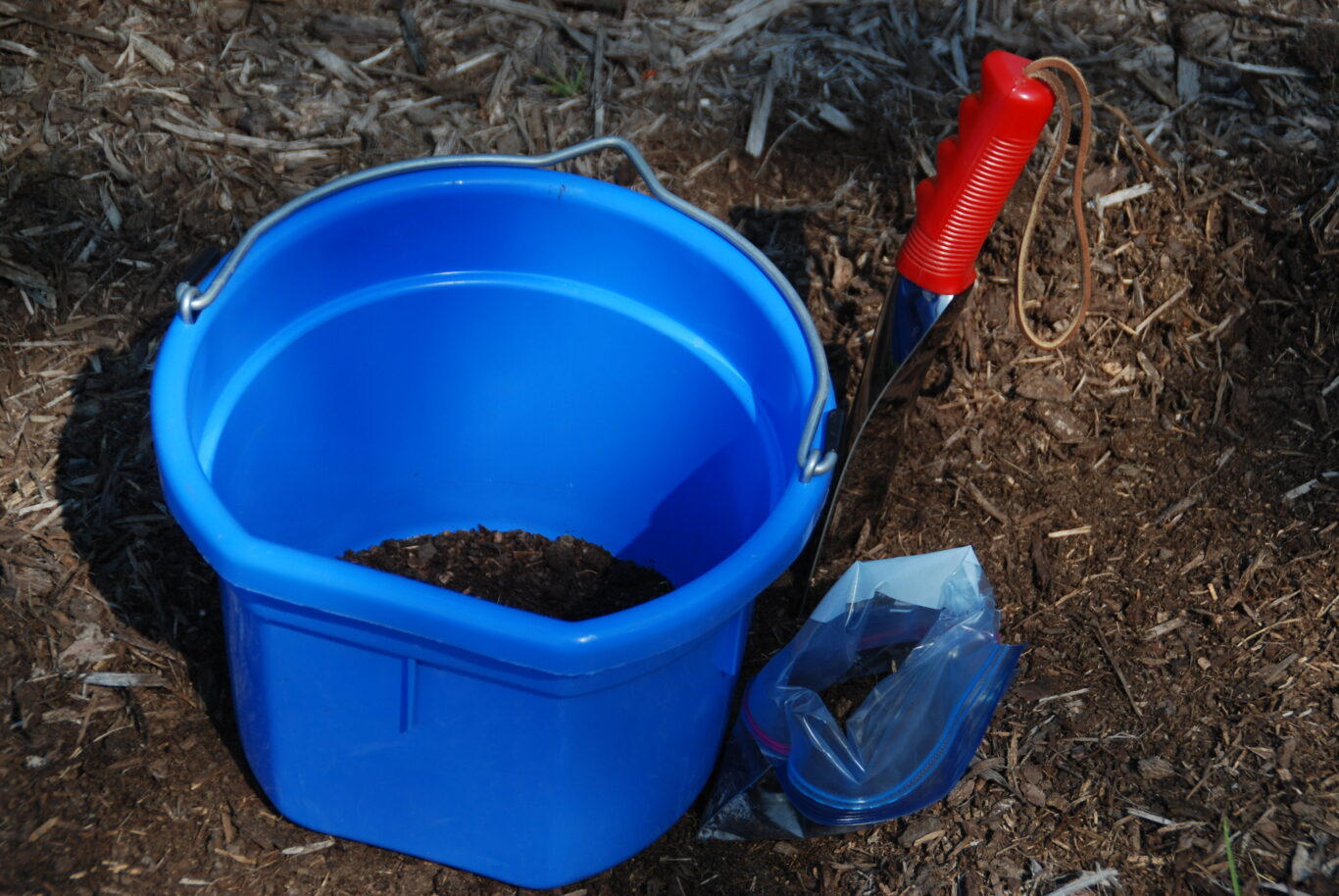
Starting with a soil test will provide you with basic information that can help you decide what is needed to improve the soil for the plants you are growing. Contact the local office of your University Extension Service, state-certified, or other reputable soil testing labs for details. They can direct you on how to take a soil test and where to send the sample. Skip the do-it-yourself soil testing kits. The results are not as reliable, and your money is better spent using a lab that has the staff and equipment to give you more accurate results.
While waiting for your soil test report, you can do a bit of analysis yourself. Grab a handful of soil, and if it easily forms a ball or rolls into a sausage shape, feels slippery when wet, and smoother when dry, you have a high percentage of clay in your soil. These are often called heavy soils that stay wet longer and hold onto soil nutrients. Clay soils are slow to dry out and warm up in the spring. Avoid working them when wet. This leads to compaction and clods you will be contending with all season long.
Soils with a larger percentage of sand particles don’t form a ball when moist and feel gritty to the touch. They tend to be nutrient deficient, fast draining and dry. You will be watering and fertilizing gardens growing in these types of soil more often. They do warm up and dry quickly in the spring.
When soils have a high percentage of medium-sized silt particles, the soil feels smooth like flour when dry and soapy slick when wet. These particles hold water and nutrients longer than sand but not as long as clay particles. Silty soils drain more slowly and stay colder longer than sandy soils in the spring. Overworking soils with a high percentage of silt leads to crusting and compaction, decreasing drainage and water infiltration.
Improving Your Soil
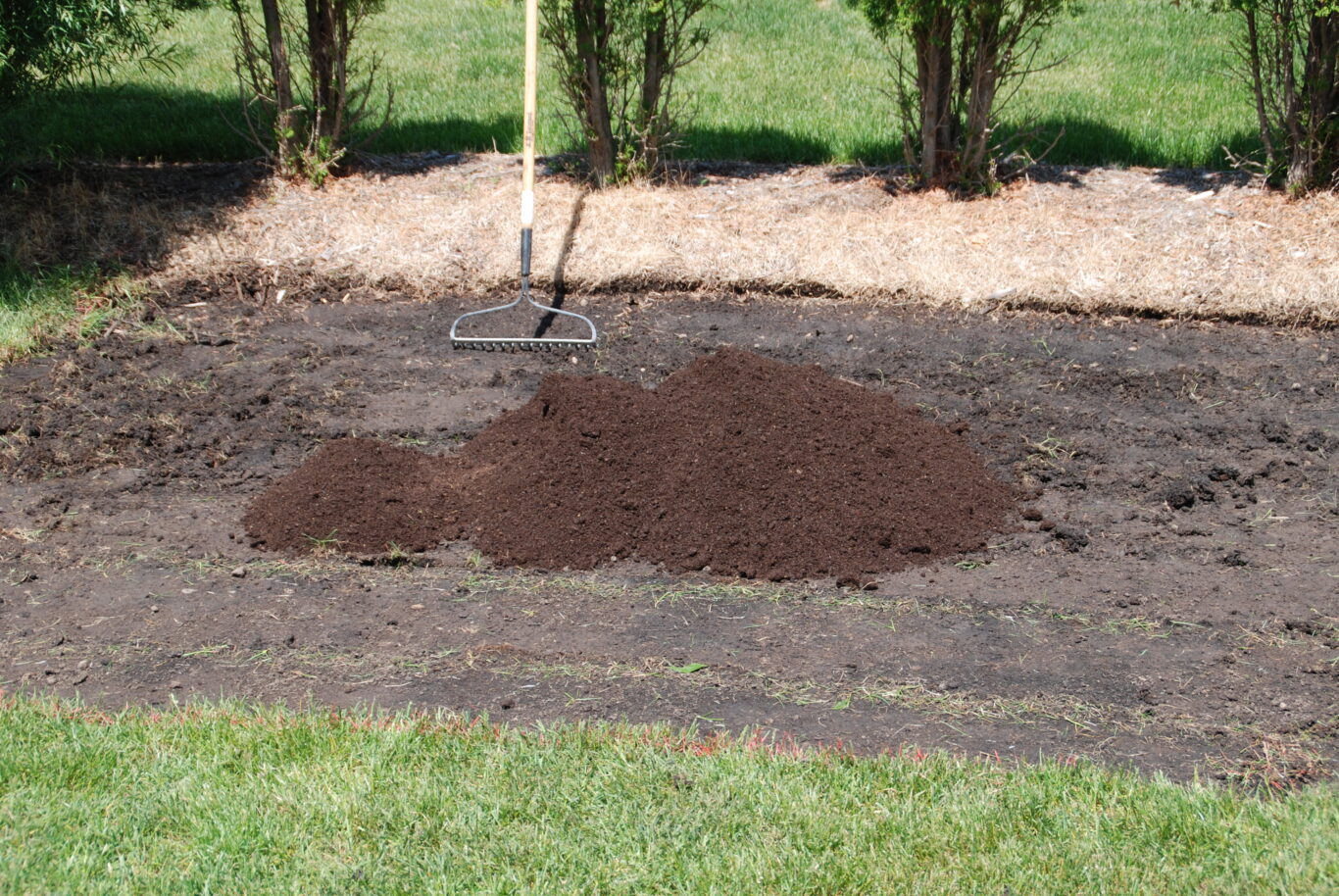
Adding several inches of compost or other organic matter to the top 8 to 12 inches (20.32cm to 30.48cm) of garden soil improves drainage in heavy soils and increases water-holding ability is fast draining soil. Increasing the organic matter also improves the infiltration rate of water, so morewater soaks in and less runs off the soil surface. This helps keep water where it falls and fertilizers where applied instead of overloading our storm sewers and potentially polluting our waterways.
Compost also promotes healthy plant growth. It provides a variety of essential plant nutrients over a long period of time. Plants growing in soil amended with compost have fewer insect and disease problems, more flowers, and larger harvests.
If your perennial plantings are struggling but do not need a total renovation, consider vertical mulching. Spread a 1 to 2 inch (2.54 to 5.08cm) layer of compost over the soil surface. Use an auger bit on a cordless drill to aerate the soil and push some of the compost down into the root zone. Make scattered holes throughout the garden in bare areas between plants. If compost is limited, aerate first, then fill the holes with compost.
No Dig/No Till Methods
Consider employing no-dig gardening, often called no-till gardening, when creating a good growing foundation. You’ll minimize disturbance of the existing soil and improve the soil in less time. Minimizing or eliminating tilling increases organic matter, maintains it, and over time improves soil health and structure, saves water, and boosts plant growth. It also reduces weeding since you are not turning the soil and bringing more weed seeds closer to the surface for them to sprout and grow.
Create your own soil from landscape trimmings, plant-based kitchen scraps, and compost on top of the existing soil. Lasagna and Hugelkultur are multi-layered no-dig gardening techniques.
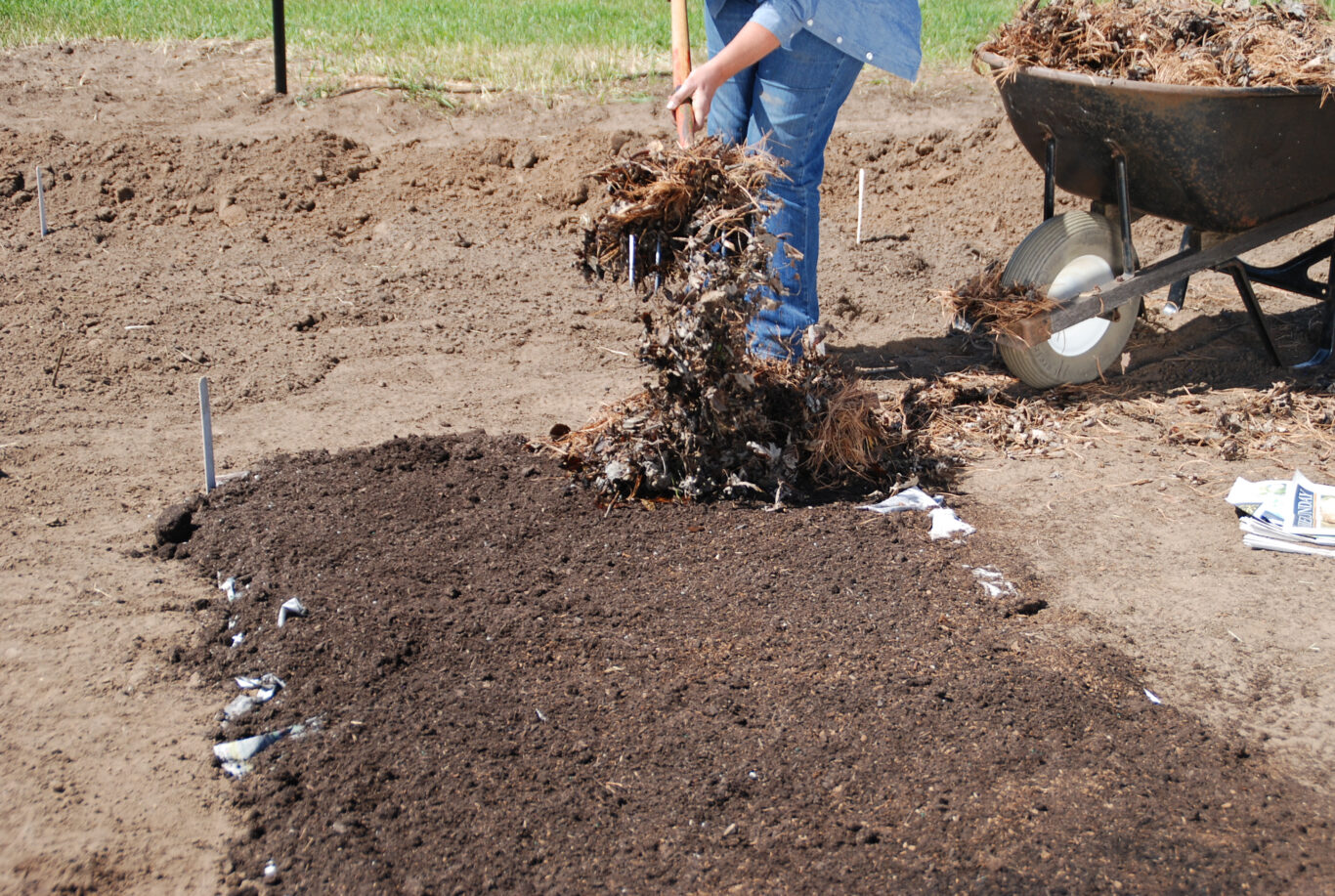
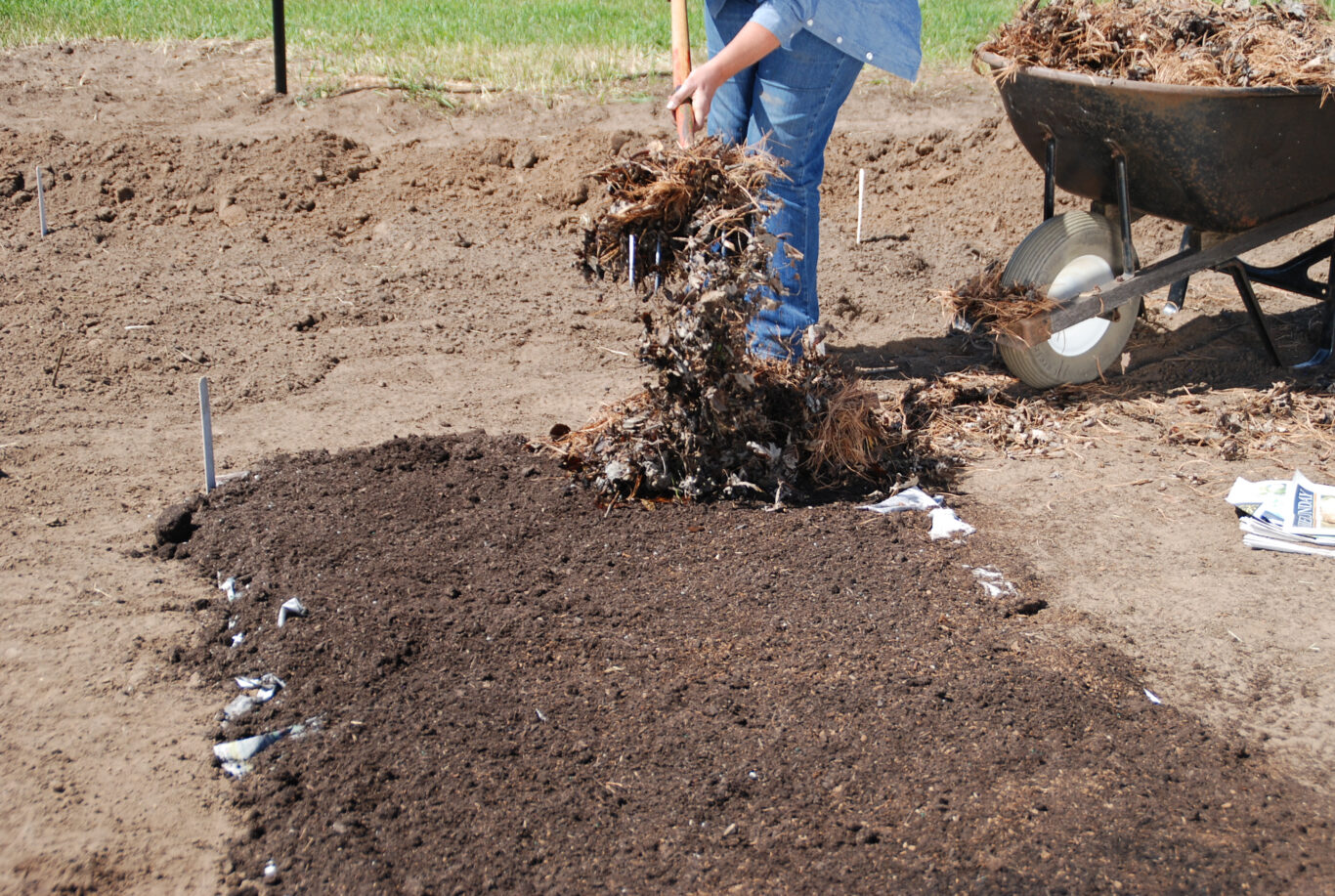
Start your lasagna garden by measuring and marking your garden bed. Cut any grass and weeds in this area very short and cover with moist newspaper or cardboard. Next, add a 2 to 3 inches (5.08 to 7.62cm) layer of compost or other organic matter. Top this with 4 to 8 inches (10.16 to 20.32cm) of plant debris such as leaves, plant-based kitchen scraps, herbicide-free grass clippings, straw, or other similar materials. Sprinkle a bit of fertilizer over this layer and cover with an inch (2.54cm) of compost. Repeat the layers, just like making lasagna, until your garden is 18 to 24 inches (45.72 to 60.96cm) high. You can build the garden in the fall when the raw materials are readily available or in the spring, right before planting.
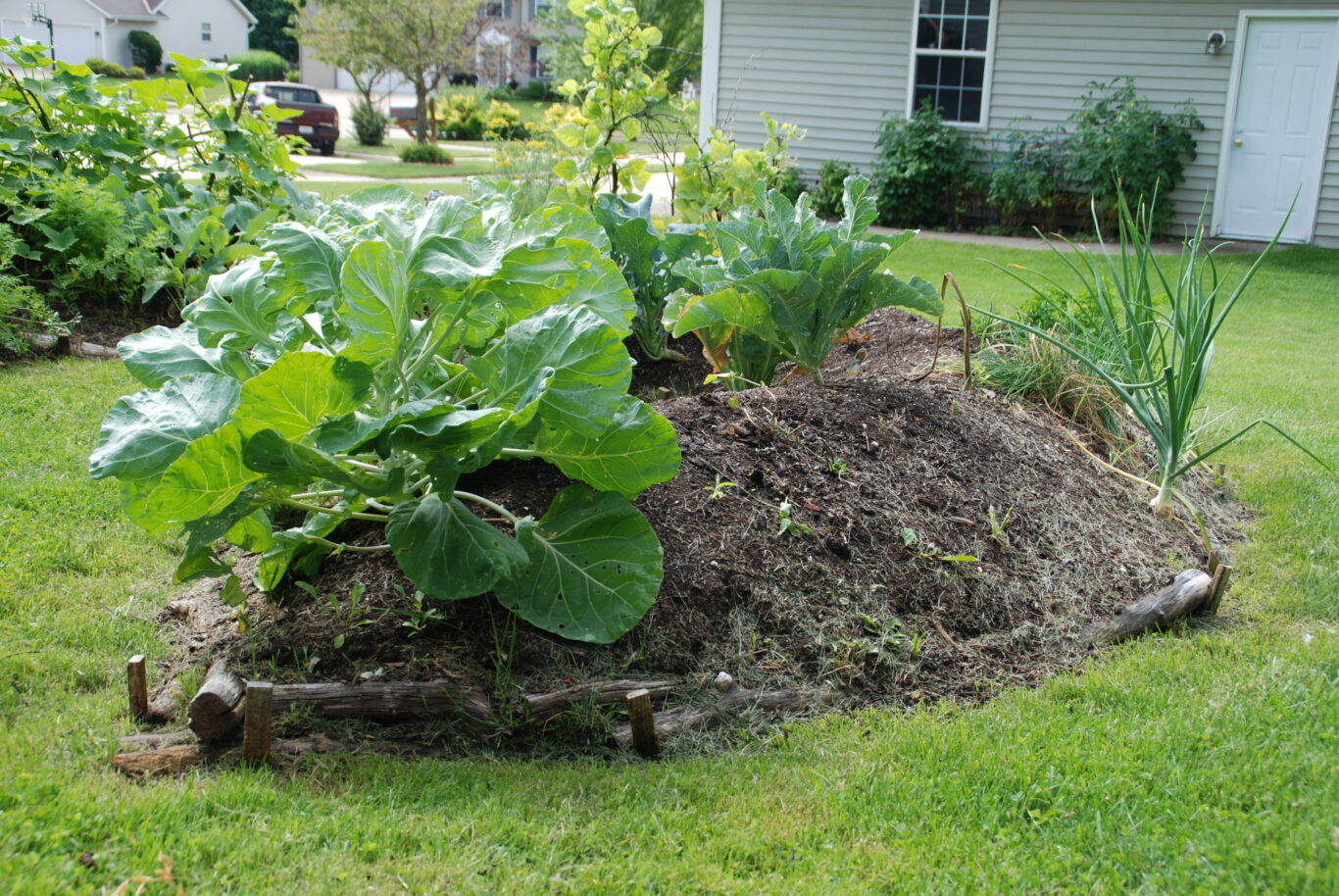
Hugelkultur, or mound gardens, take this one step further. The bottom layer is made of logs, branches, and fallen leaves. Do not include black walnut, which is toxic to many plants, or cedar and black locust, which are very slow to decompose. The rotting logs and branches absorb water, making it available to the plants in the garden. As the tree trimmings decompose, they add nutrients to the soil. Then top this layer with a lasagna garden. And don’t worry about nitrogen deficiencies often associated with woody materials being incorporated into the soil. Despite the woody material base, research and experience have found that nitrogen is not limited in the upper portion of the Hugelkultur garden.
These beds gradually settle, but the benefits remain. I found fewer weeds in the beds and continue to build additional layers every few years on top of my established beds.
If you have an abundant supply of cardboard and mulch, put them to work improving your garden. Cover the surface with non-shiny cardboard after removing any staples and tape. The cardboard is used in the first year to smother existing weeds and grass. Cover the cardboard with 5 inches (12.7cm) of organic matter such as compost or composted manure. Plant seeds and transplants into the compost. Every year spread an additional 2 inches (5.08cm) of compost over the soil.
Like any gardening endeavor, there are many ways to accomplish our goal of growing healthy, beautiful, and productive gardens. Select the method or methods that best fit your situation, available resources, and gardening style.